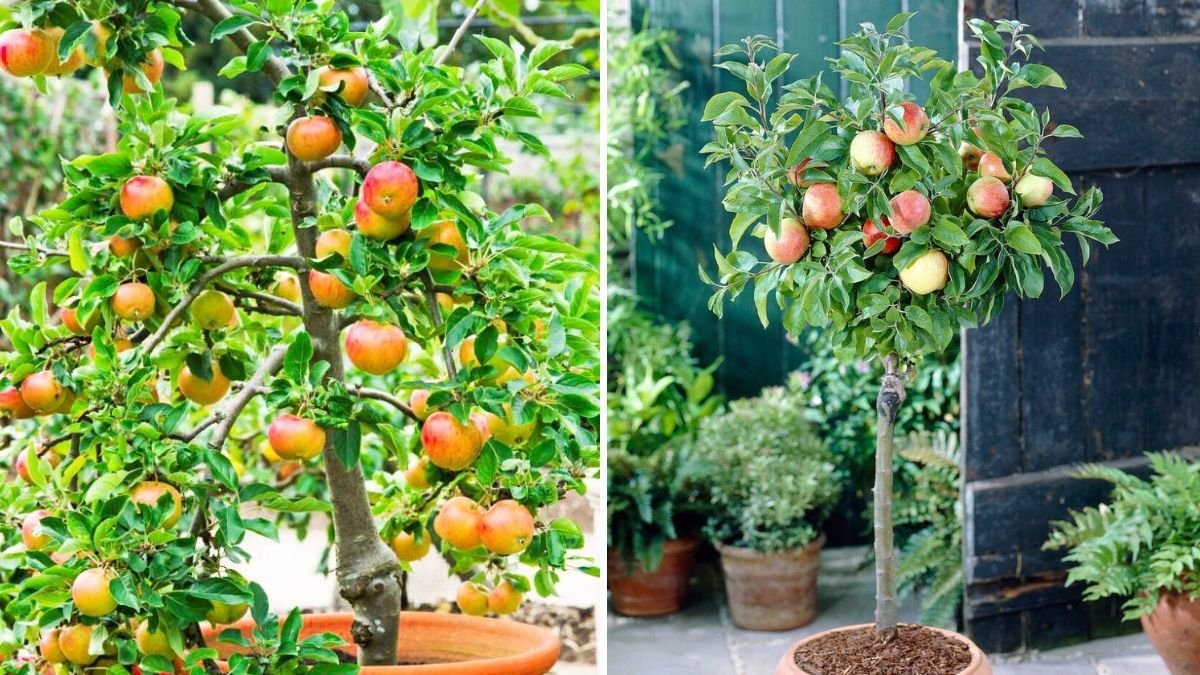
Growing apples in containers may sound challenging, but with the right approach, it’s not only possible — it’s incredibly rewarding! Whether you live in an apartment with a sunny balcony or have limited garden space, container-grown apple trees can bring you beautiful blossoms, lush foliage, and even delicious fruits right at home.
In this detailed guide, we’ll walk you through everything you need to know about how to grow apples in containers — from choosing the right variety and container to pruning, feeding, and harvesting. Let’s get started!
1. Why Grow Apples in Containers?
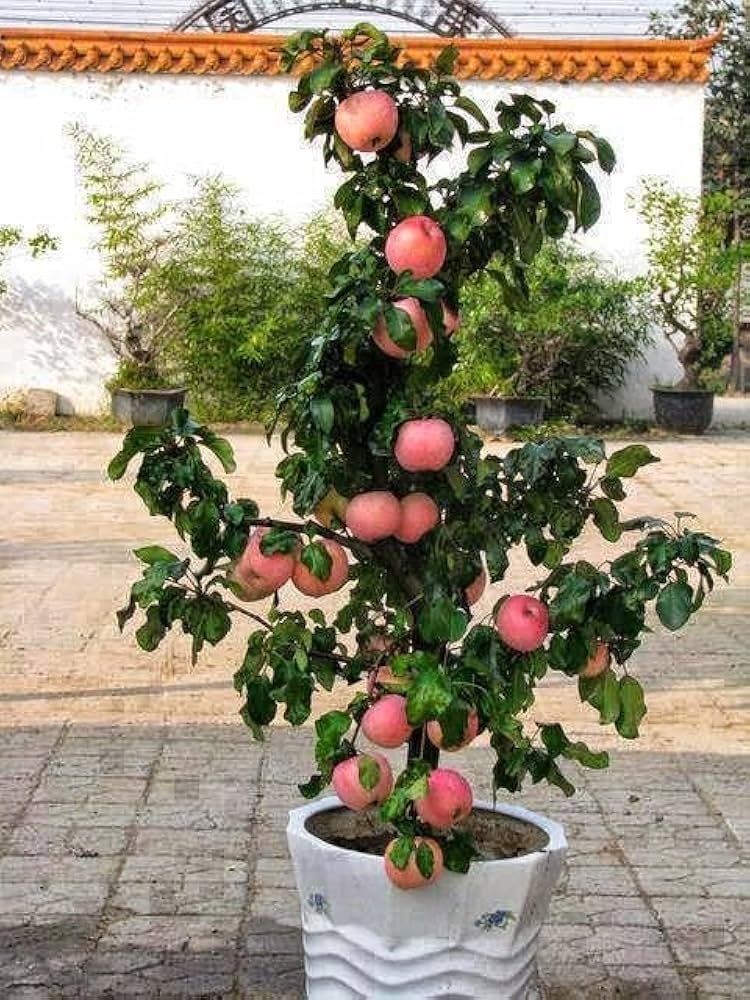
Growing apples in pots is perfect for urban gardeners and small-space dwellers. Unlike traditional orchard growing, container apple trees offer flexibility — you can move them around for sunlight, protect them from frost, and even grow multiple varieties in limited space.
Here are a few benefits:
- Space efficiency: Ideal for balconies, patios, and terraces.
- Mobility: You can move the tree to sunnier or sheltered spots as needed.
- Pest control: Easier to monitor and manage diseases or pests.
- Decorative appeal: Apple trees add beauty with their blossoms and compact foliage.
2. Choosing the Right Apple Variety for Containers
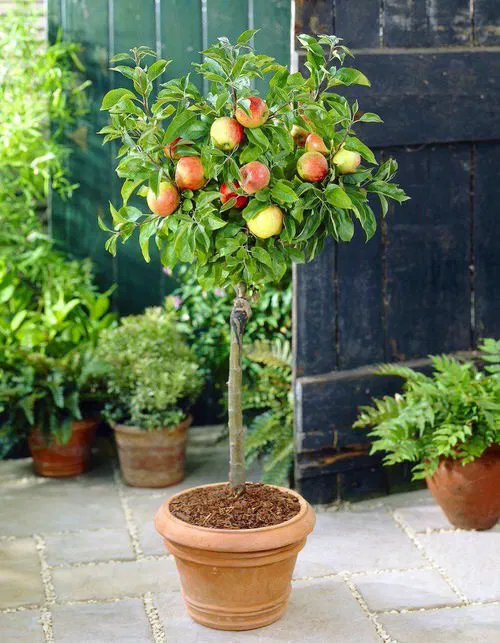
Not every apple tree thrives in a pot. The key is selecting dwarf or semi-dwarf varieties, which stay compact and produce fruit efficiently. These are grafted onto rootstocks that control their growth and size.
Best Apple Varieties for Containers:
- ‘Honeycrisp’ – Sweet, crisp, and perfect for eating fresh.
- ‘Golden Delicious’ – Reliable and adaptable to container conditions.
- ‘Fuji’ – Compact and highly productive in pots.
- ‘Gala’ – Early bearing and easy to grow.
- ‘Red Sentinel’ – A crabapple variety known for its ornamental and edible fruits.
Tip: Choose self-fertile varieties (like ‘Golden Delicious’ or ‘Egremont Russet’) if you have space for only one pot. Otherwise, plant two different varieties for better cross-pollination and higher yields.

3. Selecting the Right Container
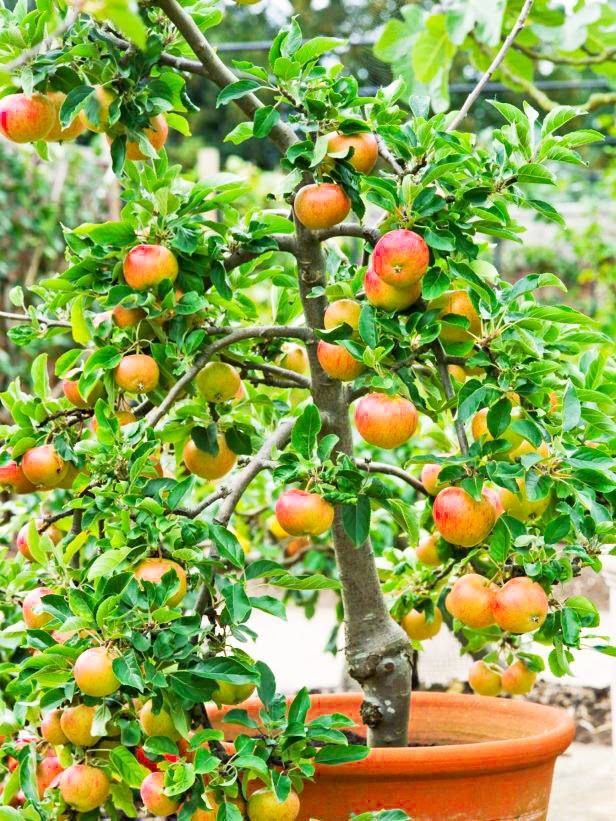
Apples need ample space for their roots to spread, even when grown in pots. Choosing the right size and material ensures healthy root growth and prevents waterlogging.
Ideal Container Size:
- Minimum 18–24 inches deep and 20–25 inches wide.
- Use a pot that holds at least 40–50 liters of soil.
Container Material:
- Plastic or fiberglass: Lightweight and easy to move.
- Terracotta: Breathable but heavier; great for stable outdoor positioning.
- Wooden barrels or half wine casks: Provide insulation and rustic charm.
Make sure the container has adequate drainage holes at the bottom — apples don’t like “wet feet.”
4. Best Soil Mix for Potted Apples
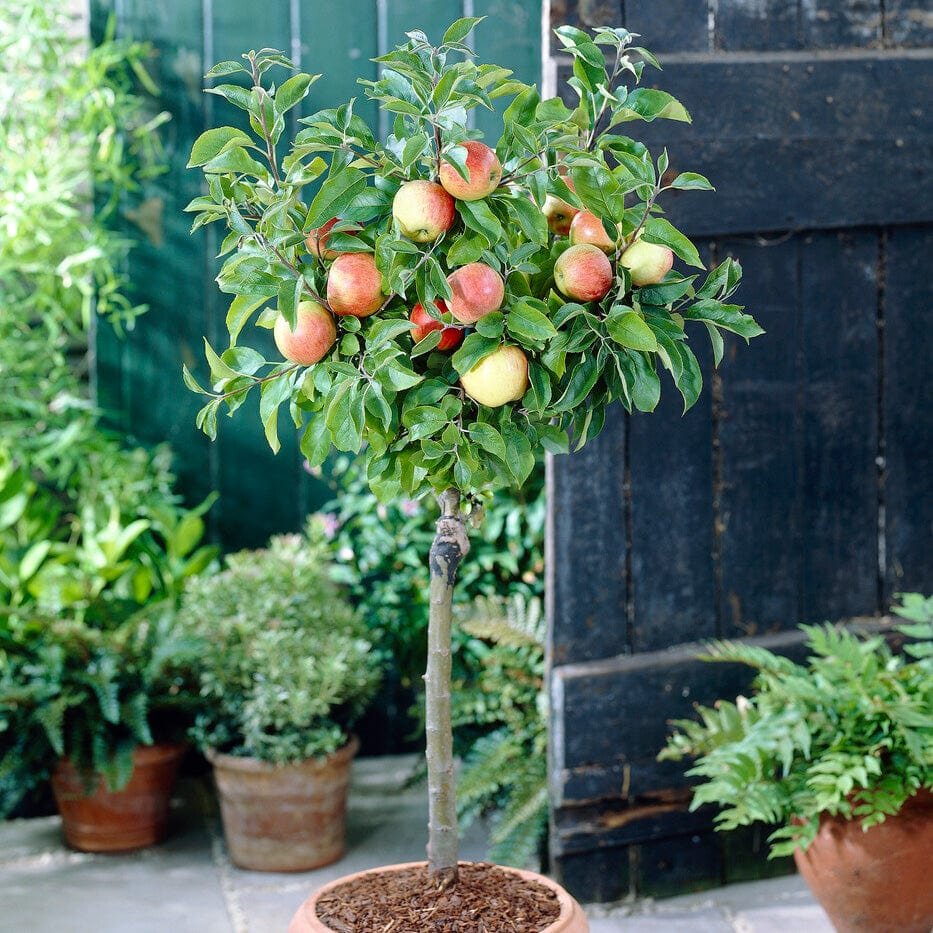
Apples prefer well-draining, nutrient-rich soil with a slightly acidic to neutral pH (around 6.0–7.0).
Recommended Potting Mix:
- 1 part garden loam
- 1 part compost or well-rotted manure
- 1 part perlite or coarse sand for aeration
You can also buy a premium fruit tree potting mix from garden centers for convenience. Before planting, place a layer of small stones or broken pot pieces at the bottom for better drainage.

5. How to Plant an Apple Tree in a Container
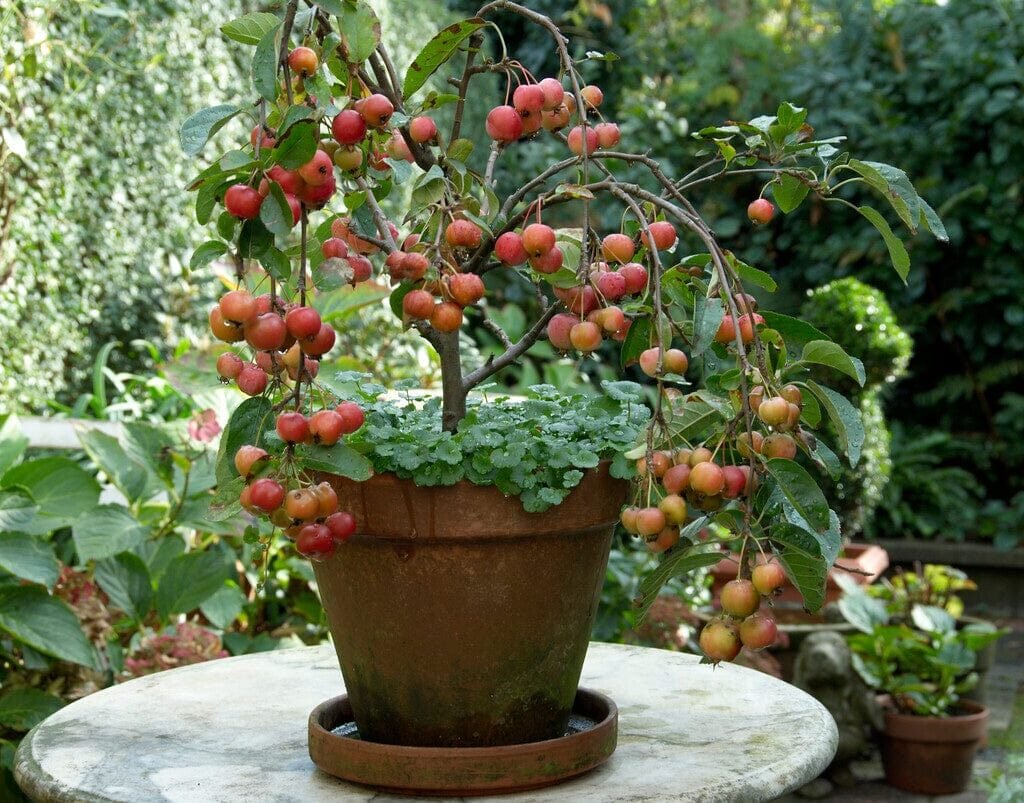
Follow these steps to ensure your tree starts off strong:
Step 1: Fill your container halfway with the potting mix.
Step 2: Gently remove the apple sapling from its nursery pot, taking care not to disturb the roots.
Step 3: Place the tree in the center of the container — make sure the graft union (the swollen area on the trunk) sits above the soil line.
Step 4: Fill in the remaining soil, lightly pressing around the base to eliminate air pockets.
Step 5: Water thoroughly to settle the soil.
Pro Tip: Mulch the top with straw, wood chips, or compost to retain moisture and regulate temperature.
6. Watering and Feeding Your Potted Apple Tree
Watering:
Container apple trees dry out faster than those in the ground. Keep the soil consistently moist but never waterlogged.
- Water deeply whenever the top 2 inches of soil feel dry.
- Reduce watering slightly in winter when growth slows down.
Feeding:
Apples are heavy feeders, especially in pots where nutrients deplete faster.
- Use a balanced fruit tree fertilizer (10-10-10) every 4–6 weeks during the growing season (spring to early summer).
- Alternatively, apply slow-release organic fertilizer in spring and top-dress with compost mid-season.
- Stop feeding after midsummer to allow the tree to harden off for winter.
7. Pruning and Training Your Apple Tree
Pruning keeps your tree healthy, compact, and productive.
When to Prune:

- Late winter or early spring before new growth begins.
- Light pruning in summer to shape the canopy and remove unwanted shoots.
How to Prune:
- Remove dead, diseased, or crossing branches.
- Maintain an open center to let light and air reach inner branches.
- Keep the height manageable — around 4–6 feet for container trees.
Training Tips:
Use stakes or trellises to support young branches. You can also train your apple as an espalier (flat against a wall or fence) to save even more space and enhance fruiting.
8. Pollination Tips for Better Fruit Set
Most apple trees need cross-pollination to set fruit, which means pollen from another variety helps them produce apples.
If you’re growing just one tree, choose self-pollinating varieties. But if space allows, grow two different apple varieties that bloom around the same time.
You can also attract pollinators like bees by planting lavender, marigolds, or borage near your container.
9. Pest and Disease Management
Container apples can still face common pests and diseases, so regular inspection is key.
Common Problems:

- Aphids: Small sap-sucking insects; wash them off with water or neem oil spray.
- Codling moths: Use pheromone traps or organic insecticidal soap.
- Powdery mildew: Prune affected areas and spray with sulfur-based fungicide.
- Apple scab: Prevent by ensuring good air circulation and removing fallen leaves.
Keep your tree clean by removing debris, fallen fruits, and dead leaves around the base.
10. Winter Care for Potted Apple Trees
In colder climates, container roots are more exposed to freezing temperatures. To protect your apple tree:
- Move the pot to a sheltered spot or unheated garage during extreme cold.
- Wrap the container with burlap, bubble wrap, or straw insulation.
- Avoid overwatering — soil should stay slightly moist but not soggy.
In mild climates, simply mulch heavily and cover the soil surface to protect the roots.
11. Harvesting Apples from Containers
Depending on the variety, apples are usually ready for harvest between late summer and early fall.
Signs your apples are ready:
- Skin color deepens and looks vibrant.
- Apples come off the branch easily when lifted and twisted.
- Seeds inside are brown and firm.
Harvest gently to avoid bruising. You can enjoy them fresh, or store them in a cool, dry place for several weeks.
12. Repotting and Long-Term Care
Every 2–3 years, repot your apple tree into fresh soil to replenish nutrients and encourage new root growth.

- Gently prune off a few outer roots before repotting.
- Trim back top growth to balance the root system.
- Use new, nutrient-rich potting mix for the best results.
With proper care, container apple trees can live and produce fruit for 10–15 years or even longer.
Final Thoughts
Growing apples in containers brings the joy of fruit gardening within everyone’s reach — no matter your space or experience level. With the right dwarf variety, quality soil, regular feeding, and a little patience, you can enjoy crisp, homegrown apples right from your patio or balcony.
Start small, observe how your tree responds, and you’ll soon master the rhythm of container apple growing. Each season, as you watch those blossoms turn into sweet fruits, you’ll realize just how rewarding this little green adventure can be.

Leave A Comment