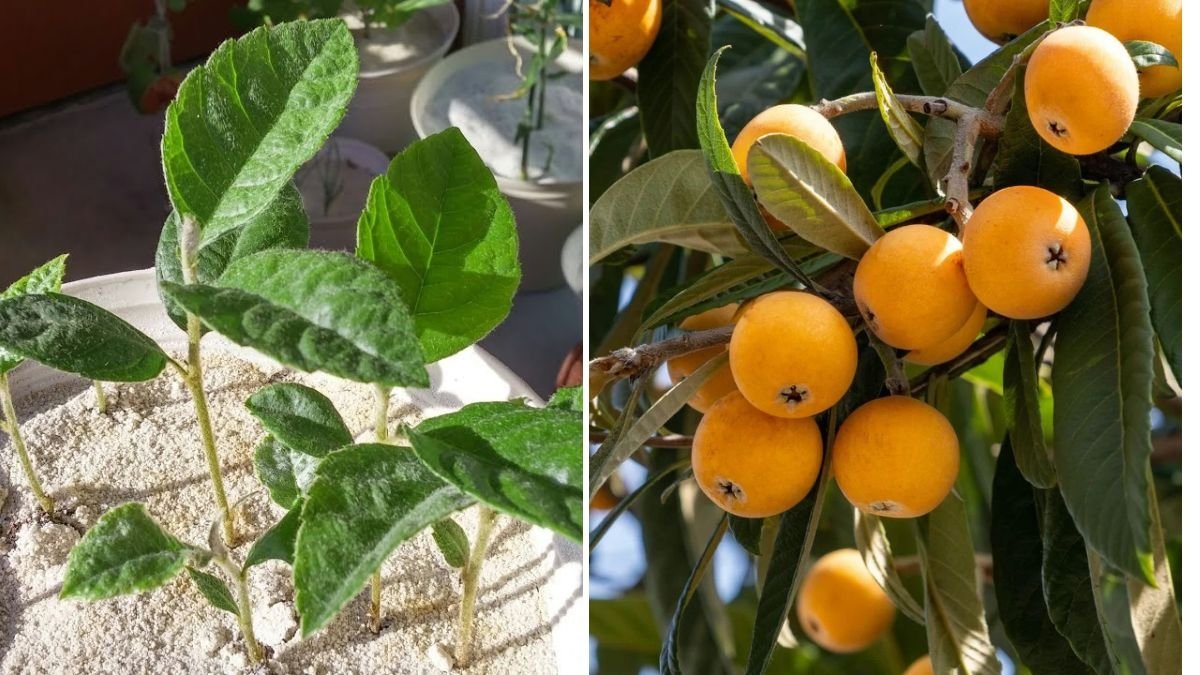
If you’ve ever dreamed of growing a tropical fruit tree that’s both beautiful and bountiful, the loquat tree (Eriobotrya japonica) is a perfect choice. With its glossy evergreen leaves, fragrant spring blossoms, and clusters of golden-orange fruits, this hardy subtropical tree is a stunning addition to any home garden.
Loquat trees are not only ornamental but also incredibly productive, often yielding dozens of sweet, juicy fruits each season with minimal care. Whether you’re planting for home consumption or small-scale farming, understanding how to grow, care for, and harvest loquat trees will ensure you enjoy abundant fruit for many years.
Let’s dive into everything you need to know to grow a thriving loquat tree and get a ton of delicious fruit!
1. Introduction to Loquat Trees

The loquat, also known as the Japanese plum or Chinese plum, is a small evergreen fruit tree native to southeastern China. It belongs to the Rosaceae family, the same family as apples, pears, and peaches.
Loquats produce clusters of oval or pear-shaped fruits that range from yellow to deep orange when ripe. The flesh is juicy and sweet-tart, with a flavor reminiscent of a mix between mango, peach, and citrus.
The tree itself is compact and fast-growing, typically reaching 5–8 meters (16–26 feet) tall, making it suitable for both small gardens and container cultivation.

2. Choosing the Right Loquat Variety

Selecting the right variety is essential for maximizing fruit yield and flavor. Some varieties are better for fresh eating, while others are suited for preserves or juice.
Popular Loquat Varieties:
- ‘Champagne’ – Produces medium-sized fruit with sweet-tart flavor; ideal for cooler climates.
- ‘Big Jim’ – Large, juicy fruits; high-yielding and perfect for fresh eating.
- ‘Golden Nugget’ – Compact tree with excellent flavor; perfect for small spaces.
- ‘Advance’ – Cold-hardy variety that produces sweet, firm fruit.
- ‘Early Red’ – Early-season producer with reddish-orange fruits.
Choose a variety that matches your climate and space. If possible, plant two different varieties to encourage cross-pollination and boost yields.
3. Best Climate and Growing Conditions

Loquats thrive in subtropical to mild temperate climates. They can tolerate light frost but not prolonged freezing temperatures.
Ideal Conditions:
- Temperature: 10°C–30°C (50°F–86°F)
- Sunlight: Full sun for at least 6–8 hours daily
- Rainfall: Moderate to high, but well-drained soil is essential
In tropical regions, loquats bear fruit in early spring, while in cooler areas, the harvest may come in late spring or early summer.
4. Soil Requirements

Healthy soil is key to a productive loquat tree.
- Type: Well-drained loam or sandy loam
- pH: Slightly acidic to neutral (5.5–7.0)
- Drainage: Loquats dislike waterlogging — choose a raised bed or slope if your soil tends to hold water.
Before planting, mix in plenty of organic compost or well-rotted manure to boost fertility and improve soil texture.

5. How to Plant Loquat Trees
When to Plant
Plant loquat trees during the spring or early summer when temperatures are warm and the soil is moist.
Step-by-Step Planting Guide
- Select the Location:
Choose a sunny, sheltered spot away from strong winds. - Prepare the Hole:
Dig a hole twice the width and the same depth as the root ball. - Soil Preparation:
Mix compost or organic matter into the backfill soil. - Planting:
Place the tree in the hole so the graft union (if present) is above the soil line. - Backfill and Water:
Refill the hole gently, pressing the soil down to remove air pockets, then water thoroughly. - Mulching:
Apply mulch (straw, compost, or leaves) around the base to conserve moisture and regulate soil temperature.
6. Watering and Feeding

Watering
Young loquat trees need consistent watering during establishment.
- First Year: Water deeply once or twice a week.
- Mature Trees: Water during dry periods, especially when flowers and fruits are developing.
Avoid overwatering — soggy roots can cause rot.
Fertilizing
Feed loquat trees 3–4 times a year using a balanced organic fertilizer (10-10-10 or compost-based mix).
- Apply fertilizer in early spring, midsummer, and late autumn.
- Avoid high nitrogen fertilizers, as they promote leafy growth at the expense of fruiting.
For extra vigor, apply a foliar spray of seaweed extract or compost tea during the growing season.
7. Pruning for Growth and Productivity
Proper pruning helps shape the tree, improve air circulation, and encourage more fruiting branches.

When to Prune
- Young Trees: Prune in early spring to establish shape.
- Mature Trees: Prune after harvest to remove dead or overcrowded branches.
How to Prune
- Remove Dead Wood: Eliminate any diseased or damaged branches.
- Thin the Canopy: Allow sunlight to penetrate the inner branches.
- Shorten Long Shoots: Encourage branching and the formation of fruiting spurs.
- Maintain Shape: Keep the tree open-centered or vase-shaped for easy harvesting and airflow.
Annual pruning prevents the tree from becoming too tall and makes fruit collection much easier.
8. Pollination and Flowering
Loquat trees bloom in late autumn to early winter, producing clusters of small, white, fragrant flowers that attract bees and other pollinators.
Most varieties are self-fertile, but cross-pollination between two trees can greatly improve fruit size and yield. If you have limited space, grafting multiple varieties onto one tree can serve the same purpose.
9. Pest and Disease Management
Loquats are generally hardy but can occasionally face pests and diseases.
Common Pests
- Fruit Flies: Lay eggs in ripening fruit. Use traps or bag the fruit clusters to protect them.
- Aphids: Suck sap from young shoots; control with neem oil or insecticidal soap.
- Scale Insects: Appear as small bumps on leaves and stems; remove manually or apply horticultural oil.
Diseases
- Fire Blight: Bacterial infection that causes blackened twigs. Prune and destroy affected parts immediately.
- Leaf Spot and Powdery Mildew: Fungal problems caused by humidity. Improve air circulation and avoid overhead watering.
Good sanitation, mulching, and regular monitoring will keep most problems at bay.
10. Encouraging Heavy Fruit Production
To get a ton of fruit, focus on these key strategies:

- Balanced Fertilization: Use compost or potassium-rich fertilizer to encourage flowering and fruiting.
- Proper Pollination: Plant two trees or attract pollinators with flowering companion plants.
- Prune Regularly: Maintain a healthy canopy that allows sunlight to reach all branches.
- Thinning Fruit: If clusters are overcrowded, thin out smaller fruits to improve size and quality.
- Consistent Watering: Stress-free trees produce better yields.
With the right care, a mature loquat tree can produce 50–100 kg (110–220 lbs) of fruit per year!
11. Harvesting Loquats
When to Harvest
Loquats ripen in spring or early summer, depending on your region. The fruits are ready to pick when:
- Their skin turns golden yellow to orange.
- They feel slightly soft to the touch.
- They emit a sweet aroma.
How to Harvest
Cut entire fruit clusters with pruning shears to prevent bruising. Handle them gently — loquats are delicate and bruise easily.
Loquats do not ripen well after picking, so harvest only when fully ripe.
12. Post-Harvest Handling and Storage
Fresh loquats have a short shelf life of about one week when stored in a cool, dry place. To extend their use:
- Refrigerate in airtight containers for up to 10 days.
- Freeze peeled and deseeded fruits for smoothies or jams.
- Process into jams, syrups, wines, or dried snacks for long-term storage.
Their naturally high pectin content makes loquats perfect for preserves and jellies.

13. Health Benefits of Loquat Fruit
Loquats aren’t just delicious — they’re packed with nutrients and medicinal properties.
- Rich in Vitamins A and C: Boosts immunity and improves skin health.
- High in Fiber: Supports digestion and weight management.
- Low in Calories: A healthy fruit for energy without added sugars.
- Antioxidants: Contains carotenoids and flavonoids that combat oxidative stress.
- Traditional Uses: Loquat leaves are used in herbal teas to support respiratory health.
Regular consumption promotes overall wellness and vitality.
14. Final Thoughts
Growing a loquat tree is one of the most rewarding gardening experiences you can have. These beautiful evergreens provide shade, fragrance, and abundant fruit with minimal maintenance. From selecting the right variety to pruning and feeding, every step you take contributes to a healthier, more productive tree.
With proper care, patience, and attention to detail, you can enjoy baskets full of golden loquats year after year. So, roll up your sleeves, plant your loquat tree, and watch it reward you with a ton of delicious, sun-kissed fruit — the perfect blend of beauty and bounty right in your backyard.

Leave A Comment